
Number of visitors on page:
Product visitors:
10.00€
Share:
Katalogimi në botim – (CIP)
Biblioteka Kombëtare e Kosovës “Pjetër Bogdani”
821.111-1
Barkan, Stanley H.
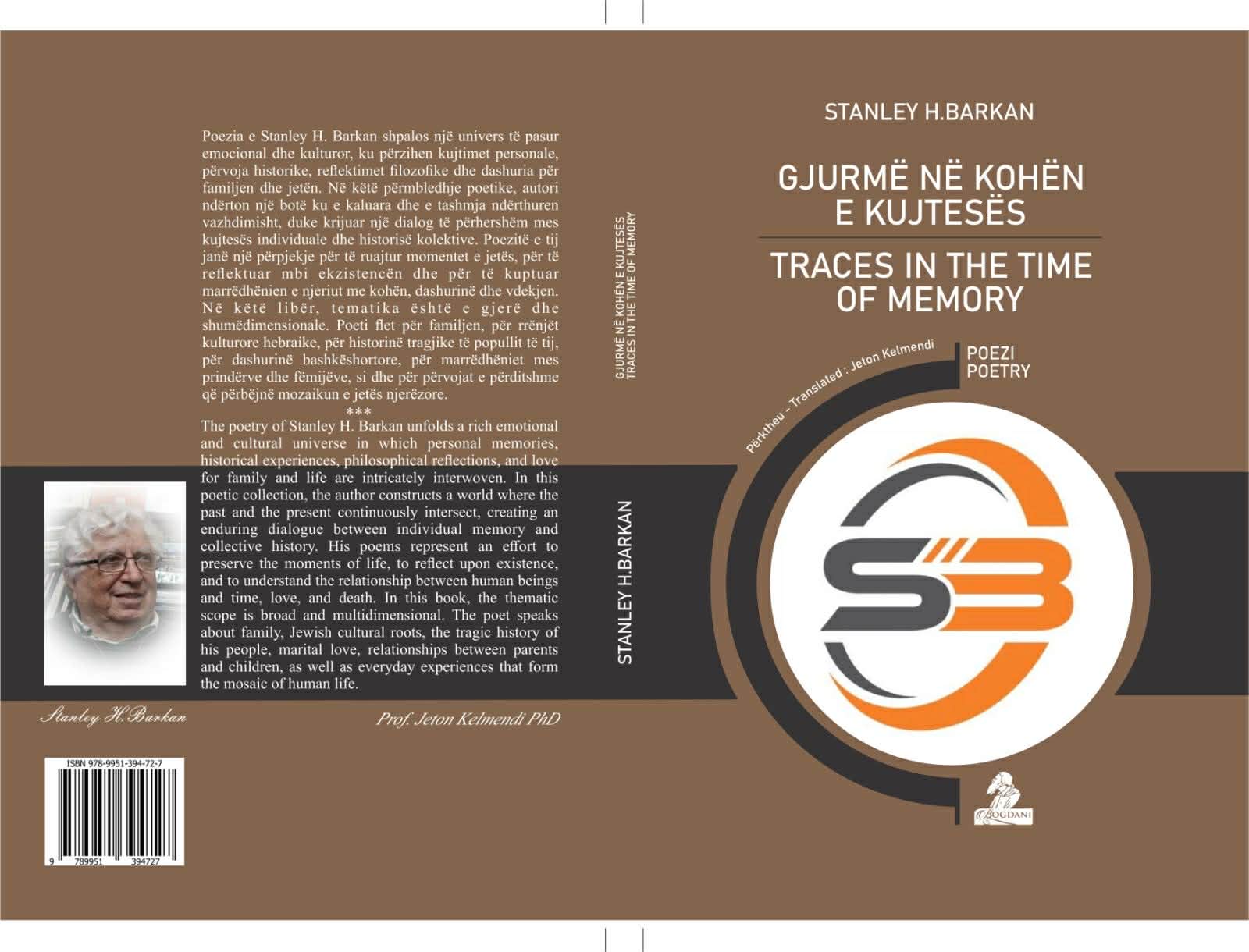
Gjurmë në kohën e kujtesës : poezi = Traces in the
time of memory : poetry / Stanley H. Barkan;
përktheu nga anglishtja Jeton Kelmendi. – Prishtinë :
IWA Bogdani, 2026 . – 207 f. ; 21 cm. – (Biblioteka
“Adem Shkreli”)
1. Kelmendi, Jeton
ISBN 978-9951-394-72-7
UNIVERSI POETIK I KUJTESËS, FAMILJES DHE HISTORISË NË GJURMË NË KOHËN E KUJTESËS I STANLEY H. BARKAN
Nga Prof. Jeton Kelmendi PhD
Poezia e Stanley H. Barkan shpalos një univers të pasur emocional dhe kulturor, ku përzihen kujtimet personale, përvoja historike, reflektimet filozofike dhe dashuria për familjen dhe jetën. Në këtë përmbledhje poetike, autori ndërton një botë ku e kaluara dhe e tashmja ndërthuren vazhdimisht, duke krijuar një dialog të përhershëm mes kujtesës individuale dhe historisë kolektive. Poezitë e tij janë një përpjekje për të ruajtur momentet e jetës, për të reflektuar mbi ekzistencën dhe për të kuptuar marrëdhënien e njeriut me kohën, dashurinë dhe vdekjen. Në këtë libër, tematika është e gjerë dhe shumëdimensionale. Poeti flet për familjen, për rrënjët kulturore hebraike, për historinë tragjike të popullit të tij, për dashurinë bashkëshortore, për marrëdhëniet mes prindërve dhe fëmijëve, si dhe për përvojat e përditshme që përbëjnë mozaikun e jetës njerëzore. Në shumë poezi, familja shfaqet si qendra emocionale e botës poetike. Për shembull, në poezinë kushtuar të birit, autori shpreh një dashuri të thellë prindërore dhe një ndjenjë krenarie për rrugën që ka ndjekur djali i tij në jetë. Kjo poezi shndërrohet në një reflektim të ndjeshëm mbi kalimin e kohës dhe mbi mënyrën se si prindërit vazhdojnë t’i shohin fëmijët e tyre si të vegjël, edhe kur ata janë rritur dhe kanë krijuar familjet e tyre.
Një temë tjetër e rëndësishme është reflektimi mbi besimin dhe marrëdhënien e njeriut me Zotin. Në poezinë “Një mesazh për Zotin”, poeti përshkruan momentin kur vendos një shënim në Murin Perëndimor në Jerusalem. Kjo skenë e thjeshtë bëhet një meditacion i thellë mbi komunikimin e njeriut me hyjnoren dhe mbi misterin e lutjes. Pyetja që ngrihet në këtë poezi nuk është vetëm nëse mesazhi arrin te Zoti, por edhe nëse fjalët e njeriut janë mjaftueshëm të rëndësishme për të merituar një përgjigje hyjnore. Në shumë poezi të tjera, Barkan trajton temën e vdekjes dhe të kujtesës. Poezia “Kur të jem i vdekur” është një shembull i qartë i kësaj prirjeje. Në këtë poezi autori imagjinon momentin e vdekjes së tij dhe mënyrën se si miqtë, familjarët dhe poetët e tjerë do të mblidhen për ta kujtuar. Megjithatë, edhe pse tema është vdekja, atmosfera e poezisë nuk është e zymtë. Përkundrazi, ajo është e mbushur me një ndjenjë vazhdimësie, ku arti dhe kujtesa e mbajnë gjallë njeriun edhe pas largimit nga kjo botë. Një dimension tjetër i rëndësishëm tematik është historia dhe identiteti kulturor. Në disa poezi, autori përmend ngjarje historike tragjike që lidhen me përndjekjen e hebrenjve gjatë historisë, duke filluar nga shkatërrimi i tempullit të Jerusalemit e deri te Shoah-u. Këto poezi nuk janë thjesht rikujtime historike; ato janë një thirrje për ndërgjegje dhe një reflektim mbi dhunën dhe padrejtësinë që ka shoqëruar historinë njerëzore.
Stili poetik i Stanley H. Barkan karakterizohet nga një kombinim i thjeshtësisë dhe thellësisë. Vargjet e tij janë të drejtpërdrejta dhe shpesh përdorin një gjuhë të qartë dhe të kuptueshme, por brenda kësaj thjeshtësie fshihet një kompleksitet i madh emocional dhe filozofik. Autori përdor një strukturë të lirë poetike, duke shmangur shpesh rimën tradicionale dhe duke u përqendruar më shumë në ritmin e brendshëm të vargut. Një tipar i rëndësishëm i stilit të tij është përdorimi i narracionit poetik. Shumë nga poezitë e tij janë ndërtuar si tregime të shkurtra që rrëfejnë një ngjarje ose një kujtim. Për shembull, në poezinë për panairin e antikiteve, autori përshkruan një skenë të thjeshtë të një tregu librash dhe objektesh të vjetra, por përmes kësaj skene ai refleton mbi kalimin e kohës dhe mbi mënyrën se si njerëzit bëhen pjesë e historisë. Një element tjetër stilistik është përdorimi i referencave kulturore dhe historike. Poeti përmend figura biblike, ngjarje historike dhe tradita kulturore, duke krijuar një tekst që ndërthur dimensionin personal me atë universal. Në këtë mënyrë, përvoja individuale e autorit bëhet pjesë e një narrative më të madhe njerëzore.
Gjithashtu, Barkan përdor shpesh një ton ironik ose humoristik për të trajtuar tema serioze. Në poezinë ku flet për moshën e tij dhe për urimet që njerëzit i bëjnë për jetë të gjatë, ai shpreh me humor lodhjen dhe shqetësimet që sjell plakja. Ky humor i lehtë e bën poezinë më të afërt dhe më njerëzore. Një tjetër element stilistik është përdorimi i figurave të thjeshta, por shumë të fuqishme. Autori nuk përdor metafora të ndërlikuara; përkundrazi, ai krijon imazhe të qarta dhe konkrete që i japin poezisë një dimension vizual të fortë.
Imagjinata poetike e Stanley H. Barkan është e lidhur ngushtë me kujtesën dhe përvojën personale. Ai nuk krijon botë fantastike të shkëputura nga realiteti; përkundrazi, ai transformon realitetin e përditshëm në poezi përmes reflektimit dhe imagjinatës. Në shumë poezi, autori përdor imagjinatën për të rikrijuar skena nga fëmijëria ose nga jeta familjare. Për shembull, përshkrimet e lagjeve të Brooklyn-it dhe të kujtimeve të rinisë krijojnë një atmosferë nostalgjike që e bën lexuesin të ndiejë afërsinë me botën e poetit. Një tjetër aspekt i imagjinatës së tij është mënyra se si ai ndërthur realitetin me elemente mitologjike dhe biblike. Në disa poezi, figurat biblike dhe historike shfaqen si pjesë e reflektimeve të tij mbi jetën dhe moralin njerëzor. Kjo e bën poezinë e tij të ketë një dimension simbolik dhe filozofik. Imagjinata e Barkanit shfaqet gjithashtu në mënyrën se si ai i jep zë objekteve dhe kafshëve. Në disa poezi për macet, për shembull, ai krijon një perspektivë të re duke imagjinuar botën nga këndvështrimi i tyre. Këto poezi janë të mbushura me humor dhe ndjeshmëri, duke treguar aftësinë e autorit për të gjetur poezi edhe në momentet më të zakonshme të jetës. Një tjetër dimension imagjinar është reflektimi mbi pavdekësinë dhe kohën. Në disa poezi, autori imagjinon mënyra të ndryshme për të kapërcyer kufijtë e kohës dhe të vdekjes, duke sugjeruar se arti dhe kujtesa janë mënyra për të arritur një formë të pavdekësisë.
Libri poetik ‘Gjurmë në Kohën e Kujtesës’ i Stanley H. Barkan është një dëshmi e fuqisë së poezisë për të ruajtur kujtesën dhe për të reflektuar mbi përvojën njerëzore. Në këtë përmbledhje, autori ndërton një univers poetik ku ndërthuren dashuria familjare, historia, besimi dhe reflektimet mbi jetën dhe vdekjen. Stili i tij i thjeshtë, por i thellë, e bën poezinë të afërt dhe të kuptueshme për lexuesin, ndërsa imagjinata e tij krijon imazhe të fuqishme që mbeten gjatë në mendje. Përmes këtyre poezive, Barkan na kujton se jeta përbëhet nga momente të vogla, kujtime dhe marrëdhënie njerëzore, dhe se arti është një mënyrë për t’i ruajtur ato përtej kufijve të kohës. Në fund, kjo përmbledhje poetike mund të lexohet si një udhëtim nëpër jetën e një njeriu që reflekton mbi të kaluarën, jeton me intensitet të tashmen dhe përpiqet të kuptojë misterin e së ardhmes. Poezia e tij është një dëshmi e dashurisë për jetën dhe për njerëzit që e bëjnë atë të vlefshme.
THE POETIC UNIVERSE OF MEMORY, FAMILY, AND HISTORY IN TRACES IN THE TIME OF MEMORY BY STANLEY H. BARKAN
By Prof. Jeton Kelmendi, PhD
The poetry of Stanley H. Barkan unfolds a rich emotional and cultural universe in which personal memories, historical experiences, philosophical reflections, and love for family and life are intricately interwoven. In this poetic collection, the author constructs a world where the past and the present continuously intersect, creating an enduring dialogue between individual memory and collective history. His poems represent an effort to preserve the moments of life, to reflect upon existence, and to understand the relationship between human beings and time, love, and death. In this book, the thematic scope is broad and multidimensional. The poet speaks about family, Jewish cultural roots, the tragic history of his people, marital love, relationships between parents and children, as well as everyday experiences that form the mosaic of human life. In many poems, the family appears as the emotional center of the poet’s universe. For example, in the poem dedicated to his son, the author expresses a profound parental love and a sense of pride in the path his son has followed in life. This poem becomes a sensitive reflection on the passage of time and on the way parents continue to see their children as small, even when they have grown up and formed families of their own. Another important theme is the reflection on faith and the relationship between human beings and God. In the poem “A Message to God,” the poet describes the moment when he places a note in the Western Wall in Jerusalem. This simple scene becomes a profound meditation on the communication between humanity and the divine and on the mystery of prayer. The question raised in this poem is not only whether the message reaches God, but also whether human words are significant enough to deserve a divine response.
In many other poems, Barkan addresses the themes of death and memory. The poem “When I Am Dead” is a clear example of this tendency. In this poem the author imagines the moment of his own death and the way friends, family members, and fellow poets will gather to remember him. Yet, although the theme is death, the atmosphere of the poem is not gloomy. On the contrary, it is filled with a sense of continuity, where art and memory keep a person alive even after departing from this world. Another significant thematic dimension is history and cultural identity. In several poems, the author refers to tragic historical events connected with the persecution of Jews throughout history, from the destruction of the Temple of Jerusalem to the Shoah. These poems are not merely historical recollections; they represent a call to awareness and a reflection on the violence and injustice that have accompanied human history.
The poetic style of Stanley H. Barkan is characterized by a combination of simplicity and depth. His lines are direct and often employ clear and accessible language, yet within this simplicity lies a profound emotional and philosophical complexity. The author frequently uses a free poetic structure, avoiding traditional rhyme and focusing instead on the internal rhythm of the verse. An important feature of his style is the use of poetic narration. Many of his poems are structured as short stories that recount an event or a memory. For instance, in the poem about the antique show, the author describes a simple scene from a marketplace of old books and objects, yet through this scene he reflects on the passage of time and the way people themselves become part of history. Another stylistic element is the use of cultural and historical references. The poet mentions biblical figures, historical events, and cultural traditions, creating a text that merges the personal dimension with the universal one. In this way, the author’s individual experience becomes part of a broader human narrative.
Barkan also frequently employs an ironic or humorous tone when addressing serious subjects. In a poem where he speaks about his age and the wishes people give him for a long life, he humorously expresses the fatigue and concerns that accompany aging. This gentle humor makes the poetry more intimate and human. Another stylistic characteristic is his use of simple yet powerful imagery. The author does not rely on overly complex metaphors; rather, he creates clear and concrete images that give the poetry a strong visual dimension.
Stanley H. Barkan’s poetic imagination is closely connected with memory and personal experience. He does not create fantastic worlds detached from reality; rather, he transforms everyday reality into poetry through reflection and imagination. In many poems, the author uses imagination to recreate scenes from childhood or family life. For example, descriptions of Brooklyn neighborhoods and memories of youth create a nostalgic atmosphere that allows the reader to feel a closeness to the poet’s world. Another aspect of his imagination is the way he interweaves reality with mythological and biblical elements. In several poems, biblical and historical figures appear as part of his reflections on life and human morality. This gives his poetry a symbolic and philosophical dimension. Barkan’s imagination also appears in the way he gives voice to objects and animals. In some poems about cats, for example, he creates a new perspective by imagining the world from their point of view. These poems are filled with humor and sensitivity, demonstrating the author’s ability to find poetry even in the most ordinary moments of life.
Another imaginative dimension is the reflection on immortality and time. In several poems, the author imagines different ways of transcending the limits of time and death, suggesting that art and memory are ways of achieving a form of immortality.
The poetic book Traces in the Time of Memory by Stanley H. Barkan is a powerful testimony to the ability of poetry to preserve memory and to reflect upon human experience. In this collection, the author constructs a poetic universe where family love, history, faith, and reflections on life and death are intertwined. His style, simple yet profound, makes the poetry accessible and meaningful to the reader, while his imagination creates powerful images that remain long in the mind. Through these poems, Barkan reminds us that life is composed of small moments, memories, and human relationships, and that art is a way of preserving them beyond the limits of time. Ultimately, this poetic collection can be read as a journey through the life of a man who reflects upon the past, lives the present with intensity, and seeks to understand the mystery of the future. His poetry stands as a testimony to the love of life and to the people who make that life meaningful.
Biblioteka
Edition IWA BOGDANI
www.iwabogdani.org
iwabogdani@gmail.com
IWA Bogdani, Brussels – Prishtinë
0032494464251
Autor: Stanley H. Barkan
Redaktore:
Prof. dr. Kyvete Shatri
Përktheu nga Anglishtja: Jeton Kelmendi
Dizajni i brendshem: Bogdani Design
Ballina: IWA Bogdani
Copyright © – Autori – IWA Bogdani
ISBN 978-9951-394-72-7