Afterword to the Translation
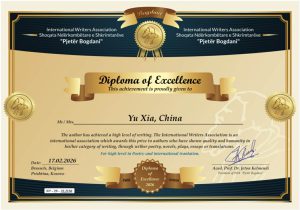
By Yu Xia
When the morning mist of the Balkans drifts across the Kosovo Plain, and the waters of the Drin River wash over the pebbles of war and memory, an Albanian poet inscribes reflections on trauma and redemption on the page in English. These simple yet soul-stirring verses made me feel duty-bound to ferry these lines, which carry blood, tears, and philosophical contemplation, into the Chinese-speaking world. I aspire to build a trans-temporal and trans-spatial Tower of Babel—between the consonant-vowel combinations of English and the tonal rhythms of Chinese, between the smoke-shrouded historical scene and the Eastern wisdom of quiet observation—allowing Chinese readers to experience the exotic cultural nuances from the vortex of global conflicts and the shared empathy of humanity.
This poetry collection was born amid the historical upheavals from the dissolution of the former Yugoslavia to the Russia-Ukraine conflict. The original author examines the tragic landscape of the Balkans in the late 20th century through the “survivor’s gaze.” From Pristina to Tirana, and from Sarajevo to Skopje, the poet’s pen cuts through the psychological trauma left by war like a scalpel. Composed between 2021 and 2024, these poems form a miniature “archive of traumatic memory,” whose literary value and contemporary significance are manifested in three dimensions: As poetry of historical witness. The poet, in the capacity of an “on-the-spot observer,” records the “individual fates forgotten by statistics.” In “Moonlight over Gaza,” the image of “a child’s eyes holding the entire shattered sky” condenses geopolitical conflicts into tangible visual experiences. This “micro-historical” writing style complements the macro-perception of the Balkans in the Chinese-speaking world, enabling readers to penetrate the surface of news headlines and touch the real temperature of life in the folds of war. From the unique perspective of Albanian language and culture, the original poems create paradoxically aesthetic lines such as “Dreams no longer dream / They have their passports confiscated at the border.” As a distinct branch of the Indo-European language family, the agglutinative nature of Albanian endows the poetry with the possibility of layered image superimposition; meanwhile, the poet’s hybrid use of religious vocabulary (“Amen,” “holy temple”) and everyday slang forms a tension field where the sacred and the secular deconstruct each other. This linguistic experimentation itself constitutes a poetic resistance to the linguistic violence of the “post-truth era”—when political discourse constantly sows division and antagonism, poetry attempts to restore the ability of language to refer to reality through the reweaving of words. Notably, this poetry collection occupies a special position in the genealogical lineage of Balkan literature. It not only inherits the historical pathos of Milošević Grujićević but also absorbs the surrealist techniques of Kosovska Momilović, while integrating the fragmented characteristics of contemporary European poetry.
In an era of increasingly frequent yet superficial cultural exchanges, truly valuable translation should unearth those “insufficiently illuminated literary corners,” allowing the spiritual undercurrents of different civilizations to nourish each other. In the translation practice of faithfulness and reconstruction for this poetry collection, I adhere to three basic principles: the “anchoring-compensation” mechanism in handling culture-specific items, the “rhythmic reconstruction” principle in the transformation of poetic forms, and the “personification transplantation” method in translating abstract concepts. Translation is not a copy but a “legitimate deformation” of the original work in a new context (in the words of Walter Benjamin). The historical place names, political events, and religious allusions in the Balkan region constitute dense cultural codes; balancing the need for Chinese readers to understand these codes with unimpeded reading tests the translator’s ability. For example, regarding a specific historical event such as “Kryengritja e Memdheve” (the Memdhe Uprising), I translated it as “The Uprising of Memory.” This translation not only retains the rebellious connotation of “Kryengritja” (uprising) but also transforms the historical event into a universally significant psychological experience through the word “memory,” aiming to achieve a leap from “cultural specificity” to “human universality.” This approach implicitly aligns with André Lefevere’s “rewriting theory.” As one of the core representatives of the “Manipulation School” in international translation studies, André Lefevere argues that translation, as a form of “rewriting,” is inevitably constrained by both ideology and poetic norms. When dealing with sensitive political themes, I neither avoid the original work’s sharp criticism of war (e.g., “The media manufactures enemies / like bakers kneading dough”) nor provide historical context through annotations to guide readers towards rational cognition rather than emotional outburst. This “de-ideologized objective presentation” is precisely the appropriate position of the translator as a cross-cultural mediator—translation does not “domesticate” foreign cultures into a form familiar to local readers but constructs a dialogue space where differences can be understood. The use of the Chinese-characteristic expression “a community with a shared future for mankind” in the translation (corresponding to the original “We are all refugees on the border”) is not a simplistic political acquiescence but an attempt by the translator to find the greatest common ground among different civilizational contexts. The rhythmic reconstruction of poetic forms reflects the translator’s profound grasp of the essence of poetry.
Although the original poems are in free verse, the basic attributes of stress rhythm and vowel harmony still constitute potential musicality. How to recreate this musicality in Chinese, a tonal language? My solution is “replacing feet with caesuras and supplementing form with rhyme”: converting stress units into Chinese “caesuras”(natural pauses in recitation) and appropriately using end rhymes and internal rhymes while maintaining the flow of poetic meaning. For instance, “Light passes through bullet holes / like God’s fingers / counting the list of the dead” employs the rhyme between “fingers” (zhi) and “list” (dan) (both belonging to the Chinese “Zhongdong Rhyme Category”). While preserving the cold tone of the original poem, this treatment endows Chinese readers with auditory aesthetics. This approach attempts to avoid the common prose tendency in free verse translation and strive to maintain the inherent formal tension of poetry.
Lu Xun stated in “Jie Ting Za Wen Er Ji · Ti Wei Ding Cao” (Jie Ting Essays Second Series · Unfinished Drafts with Unsettled Titles): “In any translation, one must take into account two aspects: on the one hand, strive to make it intelligible; on the other hand, preserve the original’s demeanor.” Appropriate foreignization is the best way to maximize the retention of the original poem’s charm and beauty. The English version of the poetry collection still retains the “image superimposition” characteristic of Albanian poetry, such as “A mother’s tears are unexploded bombs / buried in the backyard of childhood.” The direct juxtaposition of two strong visual images generates tremendous emotional impact. In translation, I not only retained the core images but also enhanced the tension between them through the unique “paratactic” advantage of Chinese—revising the original “A mother’s tears are like unexploded bombs; they are buried in the backyard of childhood” into “A mother’s tears are unexploded bombs / buried in the backyard of childhood,” deleting the conjunctions “like” and “they,” so that the two images form a more intense collision at the line break. This “subtractive translation” reflects the translator’s profound understanding of Chinese poetic aesthetics—as Feng Wenbing, a renowned modern Chinese writer and poet, noted: “The content of poetry is the form of poetry.” When the linguistic form itself becomes part of the meaning, the formal transformation in translation constitutes a recreation of the content.
The personification transplantation of abstract concepts constitutes the most creative translation strategy of the translated poetry collection. The original poems extensively use personified expressions such as “Madam Reason” and “Freedom is reading me,” transforming abstract concepts into subjects with agency. The poetic value of such expressions needs to be fully preserved in translation and their dramatic tension enhanced through the expressive characteristics of Chinese. For example, translating “Reason” as “Madam Reason” rather than the neutral “reason” endows the concept with gender characteristics and social identity through the address “Madam,” which not only echoes the original poem’s gendered critique of enlightenment rationality but also implicitly aligns with the “personification” thinking tradition in Chinese culture (e.g., “Heavenly Lord,” “Yue Lao, the Matchmaker”). The treatment of “Freedom is reading me”—the translator renders it as “Freedom is reading me”—creates a sense of defamiliarization through word order inversion, which compels readers to rethink the relationship between freedom and the individual: when freedom becomes the observer and humans the observed, what kind of freedom are we pursuing? This translation strategy can be examined within the framework of Roman Jakobson’s “three types of translation.” Jakobson divides translation into intralingual translation, interlingual translation, and intersemiotic translation. The strategy achieves semantic conversion at the linguistic level (interlingual translation), completes image reconstruction at the cultural level (intersemiotic translation), and echoes the exploration of modern Chinese poetry at the poetic tradition level (intralingual translation).
Lefevere points out that translation is always a “rewriting” carried out under the influence of specific ideological and poetic norms, and translators inevitably “manipulate” the original work to a certain extent to align it with the dominant values of the target culture. Inspired by this theory, at the ideological level, I have focused on strengthening the themes of “peace” and “anti-war” in the original work, while correspondingly downplaying specific political references that may cause controversy. This choice not only echoes China’s diplomatic philosophy of “a community with a shared future for mankind” but also makes the work more widely acceptable; at the poetic level, I have adopted a linguistic style between misty poetry and spoken word poetry, which not only preserves the avant-garde nature of the original work but also approximates the poetic tone familiar to Chinese readers, such as that of Beidao and Duo Duo. This “manipulation” is not a simplistic cultural adaptation, but a highly selective creative transformation. When the translator renders “Europe has forgotten its own name” as “Europe has lost its ID card amid the refugee crisis,” I attempt to reflect the translator’s response to the contemporary European refugee crisis—by adding the specific context of “the refugee crisis,” the abstract reflections in the original work gain new realistic relevance. This “contextual reconstruction” embodies the initiative of the translator as a cultural mediator: translation is not only about transmitting information, but also about participating in global dialogue and transforming exotic literary resources into a mirror for local cultural reflection.
The perspective of postcolonial translation theory adds a critical dimension to the translated poetry collection. Gayatri Chakravorty Spivak emphasizes in The Politics of Translation that translation is a field of power struggle between “marginalized cultures” and “dominant cultures,” and translators should consciously “give voice to the margins.” My choice to translate this “non-mainstream” literature is itself a complement to the Eurocentric translation paradigm—for a long time, foreign literature translation in China has been overly concentrated on major languages such as English, French, German, and Russian, with severely insufficient attention paid to literature from minor languages. This situation not only limits the literary horizon but also implicitly reinforces the cultural hierarchy. The original intention of translating this poetry collection is to allow Chinese readers tohear the voice from the Balkans; though faint, this voice carries half of humanity’s sufferings and hopes. By choosing to translate a poetry collection themed on war trauma, the translator attempts to closely connect literary translation with human destiny. With this awareness of translation ethics, the translator strives to make the translated poetry collection not only an aesthetic object but also a carrier of ethical reflection.
In this era of information explosion yet meaning scarcity, truly valuable translation should be such an “art of slow reading”: it requires the translator to delve into the texture of the original work, listen to the heartbeat behind the words, and then reweave this rhythm of life in another language. When the “war memories” of Albanian poets become the “shared memories” of Chinese readers through translation, and when the “sufferings of the Balkans” are transformed into the “shared experiences of humanity,” what we see is precisely the ideal form of Goethe’s concept of “Weltliteratur” (world literature)—not a cultural melting pot that eliminates differences, but an orchestra where different voices resonate harmoniously. Even in this era full of division and antagonism, words still possess the power to cross borders, poetry can still be the ark of the soul, and translators are those who redraw the map of the soul amid the constellation of words.
Pasthënie për Përkthimin
Nga Yu Xia
Kur mjegulla e mëngjesit e Ballkanit shtrihet mbi Fushën e Kosovës dhe ujërat e Drinit lajnë guralecët e luftës dhe të kujtesës, një poet shqiptar gdhend në anglisht reflektime mbi traumën dhe shëlbimin. Këto vargje të thjeshta, por thellësisht prekëse, më bënë të ndihesha e detyruar t’i bart këto rreshta që mbajnë gjak, lot dhe soditje filozofike drejt botës që flet kinezisht. Synimi im është të ndërtoj një Kullë të Babelit ndër-kohore dhe ndër-hapësinore: mes kombinimeve bashkëtingëllore-zanore të anglishtes dhe ritmeve tonale të kinezçes; mes skenës historike të mbuluar me tym dhe urtësisë lindore të vëzhgimit të qetë, duke u mundësuar lexuesve kinezë të përjetojnë nuancat kulturore ekzotike nga vorbulla e konflikteve globale dhe nga empatia e përbashkët njerëzore.
Kjo përmbledhje poetike lindi mes tronditjeve historike që shkojnë nga shpërbërja e ish-Jugosllavisë deri te konflikti Rusi-Ukrainë. Autori origjinal shqyrton peizazhin tragjik të Ballkanit të fund-shekullit XX përmes “vështrimit të të mbijetuarit”. Nga Prishtina në Tiranë, e nga Sarajeva në Shkup, pena e poetit pret traumën psikologjike të lënë nga lufta si një bisturi. Të shkruara ndërmjet viteve 2021 dhe 2024, këto poezi formojnë një “arkiv miniaturë të kujtesës traumatike”, vlera letrare dhe domethënia bashkëkohore e të cilit shfaqen në tri përmasa:
Së pari, si poezi e dëshmisë historike. Poeti, në rolin e “vëzhguesit në terren”, regjistron “fatet individuale të harruara nga statistikat”. Në “Dritë hëne mbi Gazë”, imazhi i “syve të një fëmije që mbajnë gjithë qiellin e copëtuar” përmbledh konfliktet gjeopolitike në përvoja vizuale të prekshme. Ky stil “mikro-historik” e plotëson perceptimin makro të Ballkanit në botën kineze, duke u lejuar lexuesve të depërtojnë përtej titujve të lajmeve dhe të prekin temperaturën reale të jetës në rrudhat e luftës.
Së dyti, si eksperiment gjuhësor dhe estetik. Nga perspektiva unike e gjuhës dhe kulturës shqiptare, poezitë krijojnë vargje paradoksale si: “Ëndrrat s’ëndërrojnë më / u konfiskohet pasaporta në kufi”. Si degë e veçantë e familjes indoevropiane, natyra aglutinative e shqipes i jep poezisë mundësinë e mbivendosjes shtresore të imazheve; ndërkohë, përdorimi hibrid i fjalorit fetar (“Amen”, “tempull i shenjtë”) dhe i zhargonit të përditshëm formon një fushë tensioni ku e shenjta dhe profania e zbërthejnë njëra-tjetrën. Ky eksperimentim gjuhësor përbën vetë një rezistencë poetike ndaj dhunës gjuhësore të “epokës post-të-vërtetës”, kur diskursi politik mbjell vazhdimisht ndarje dhe antagonizma, poezia përpiqet t’i rikthejë gjuhës aftësinë për t’iu referuar realitetit përmes rigërshetimit të fjalëve. Vlen të theksohet se kjo përmbledhje zë një vend të veçantë në gjenealogjinë e letërsisë ballkanike: ajo trashëgon patosin historik të Milošević Grujićević-it, përthith teknikat surrealiste të Kosovska Momilović-it dhe integron tiparet fragmentare të poezisë bashkëkohore evropiane.
Në një epokë shkëmbimesh kulturore gjithnjë e më të shpeshta, por sipërfaqësore, përkthimi me vlerë duhet të nxjerrë në dritë “qoshet letrare të pamjaftueshëm të ndriçuara”, që rrymat shpirtërore të qytetërimeve të ndryshme të ushqejnë njëra-tjetrën. Në praktikën e përkthimit mes besnikërisë dhe rindërtimit për këtë përmbledhje poetike, u mbajta në tri parime themelore: mekanizmi i “ankorimit-kompensimit” për elementet kulturore specifike; parimi i “rindërtimit ritmik” në transformimin e formës poetike; dhe metoda e “transplantimit të personifikimit” në përkthimin e koncepteve abstrakte. Përkthimi nuk është kopjim, por një “deformim i ligjshëm” i veprës origjinale në një kontekst të ri (sipas fjalëve të Walter Benjamin-it).
Toponimet historike, ngjarjet politike dhe aludimet fetare të rajonit ballkanik përbëjnë kode kulturore të dendura; balancimi mes nevojës së lexuesit kinez për t’i kuptuar këto kode dhe rrjedhshmërisë së leximit vë në provë aftësinë e përkthyesit. Për shembull, për një ngjarje historike si “Kryengritja e Memdheve”, e përktheva si “Kryengritja e Kujtesës”. Ky përkthim ruan ngarkesën rebeluese të fjalës “kryengritje”, por njëkohësisht e shndërron ngjarjen në një përvojë psikologjike me domethënie universale përmes “kujtesës”, duke synuar kalimin nga “specifika kulturore” te “universaliteti njerëzor”. Kjo qasje përputhet në mënyrë implicite me “teorinë e rishkrimit” të André Lefevere-it. Sipas tij, përkthimi, si formë “rishkrimi”, kushtëzohet pashmangshëm nga ideologjia dhe normat poetike.
Kur trajtova tema politike të ndjeshme, as nuk shmanga kritikën e mprehtë të luftës në tekstin origjinal (p.sh. “Media prodhon armiq / si bukëpjekësit që ngjeshin brumin”), as nuk hezitova të ofroj kontekst historik përmes shënimeve, për t’i udhëhequr lexuesit drejt një njohjeje racionale, jo shpërthimi emocional. Kjo “paraqitje objektive e de-ideologjizuar” është pozicioni i duhur i përkthyesit si ndërmjetës ndërkulturor, përkthimi nuk “zbut” kulturat e huaja sipas shijeve lokale, por ndërton një hapësirë dialogu ku dallimet kuptohen. Përdorimi i shprehjes karakteristike kineze “bashkësi me të ardhme të përbashkët për njerëzimin” (që korrespondon me origjinalin “Ne jemi të gjithë refugjatë në kufi”) nuk është nënshtrim politik, por përpjekje për të gjetur pikën më të gjerë të përbashkët ndërmjet konteksteve qytetëruese.
Rindërtimi ritmik i formës poetike pasqyron kuptimin e thellë të thelbit të poezisë. Edhe pse poezitë origjinale janë në varg të lirë, ritmi i theksit dhe harmonia e zanoreve krijojnë një muzikalitet të fshehtë. Si ta rikrijosh këtë në kinezçe, një gjuhë tonale? Zgjidhja ime ishte “zëvendësimi i metrës me cezura dhe plotësimi i formës me rimë”: shndërrimi i njësive të theksit në “cezura” kineze (pauza natyrore në recitim) dhe përdorimi i matur i rimave fundore e të brendshme, duke ruajtur rrjedhën e kuptimit. Kështu shmanget prirja prozaike e përkthimit të vargut të lirë dhe ruhet tensioni formal i poezisë.
Lu Xun shkruante se çdo përkthim duhet njëkohësisht të jetë i kuptueshëm dhe të ruajë “qëndrimin” e origjinalit. Një huajësim i arsyeshëm është rruga më e mirë për të ruajtur hijeshinë dhe bukurinë e poemës. P.sh., “Lotët e një nëne janë bomba të pashpërthyera / të varrosura në oborrin e fëmijërisë” ruan përplasjen e fortë të imazheve duke hequr lidhëzat, që tensioni të rritet në thyerjen e vargut. Ky “përkthim zbritës” pasqyron estetikën poetike kineze, siç thoshte Feng Wenbing: “Përmbajtja e poezisë është forma e poezisë”.
Transplantimi i personifikimit të koncepteve abstrakte është strategjia më krijuese e këtij përkthimi. Shprehje si “Zonja Arsye” apo “Liria po më lexon” ruajnë vlerën poetike duke i kthyer abstraktet në subjekte me veprim. Kjo krijon një efekt çuditësimi që e detyron lexuesin të rishqyrtojë marrëdhënien mes njeriut dhe lirisë. Strategjia mund të lexohet në dritën e ndarjes së Roman Jakobson-it për përkthimin: brenda-gjuhësor, ndër-gjuhësor dhe ndër-semiotik.
Sipas Lefevere-it, përkthimi është gjithnjë një “rishkrim” i ndikuar nga norma ideologjike e poetike. I frymëzuar prej kësaj, në nivel ideologjik kam forcuar temat e paqes dhe kundër-luftës, ndërsa kam zbutur referencat specifike që mund të shkaktonin polemika; në nivel poetik kam zgjedhur një stil mes poezisë së mjegullt dhe asaj të fjalës së folur, afër shijeve të lexuesit kinez. Kjo “manipulim” nuk është përshtatje e thjeshtë kulturore, por transformim krijues i përzgjedhur me kujdes.
Teoria postkoloniale e përkthimit shton një dimension kritik: përkthimi është fushë pushteti mes kulturave “margjinale” dhe atyre “dominuese”. Zgjedhja për të përkthyer këtë letërsi jo-kryesore është vetë një kundërpeshë ndaj eurocentrizmit. Qëllimi im ishte t’u jepet lexuesve kinezë zëri i Ballkanit—i zbehtë, por që mbart gjysmën e vuajtjeve dhe shpresave të njerëzimit. Me këtë etikë, përmbledhja e përkthyer synon të jetë jo vetëm objekt estetik, por edhe bartëse reflektimi etik.
Në këtë epokë shpërthimi informacioni e varfërie kuptimi, përkthimi me vlerë është një “art i leximit të ngadalshëm”: zhytje në teksturën e veprës, dëgjim i rrahjeve të zemrës pas fjalëve dhe rigërshetim i këtij ritmi jete në një gjuhë tjetër. Kur “kujtesat e luftës” të poetëve shqiptarë shndërrohen në “kujtesë të përbashkët” për lexuesit kinezë, dhe kur “vuajtjet e Ballkanit” bëhen “përvoja të përbashkëta të njerëzimit”, realizohet ideali i Weltliteratur-ës së Goethe-s: jo një kazan shkrirës që zhduk dallimet, por një orkestër ku zëra të ndryshëm tingëllojnë në harmoni. Edhe në këtë kohë ndarjesh, fjala ka ende fuqinë të kalojë kufijtë; poezia mund të jetë ende arka e shpirtit; dhe përkthyesit janë ata që, mes yjësive të fjalëve, rivizatojnë hartën e shpirtit.
译后记
当巴尔干半岛的晨雾掠过科索沃平原,当第纳尔河的流水冲刷着战争与记忆的卵石,一位阿尔巴尼亚诗
人用英语在纸页上刻下关于创伤与救赎的沉思的时候,这些平实却又震撼心灵得诗句让我觉得我有责任将这
些承载着血泪与哲思的诗句引渡至中文世界。我想搭建一座跨越时空的巴别塔——在英语辅元音搭配和汉语
的平仄韵律之间,在硝烟弥漫的历史现场与东方的静观智慧之间,让中文读者感受来自地球冲突旋涡中异域
文化体验和人类共情。
这部诗集诞生于后南斯拉夫解体直至俄乌冲突的历史动荡中。原作者以“幸存者的凝视”(survivor’s
gaze)审视着二十世纪末巴尔干半岛的苦难图景。从普里什蒂纳到地拉那,从萨拉热窝到斯科普里,诗人的笔
锋如手术刀般剖开战争留下的精神创伤。这些创作于 2021-2024 年间的诗篇,构成了一部微型的“创伤记忆档
案”,其文学价值与时代意义体现在三个层面: 作为历史见证的诗歌。诗人以“在场者”的身份记录着“被
统计数字遗忘的个体命运”。在《加沙的月光》中,“儿童的眼睛盛着整个破碎的天空”的意象,将地缘政
治冲突浓缩为具体可感的视觉经验。这种“微观史学”的书写方式,与中文世界对巴尔干的宏观认知形成互
补,让读者得以透过新闻标题的表象,触摸到战争褶皱里真实的生命温度。
原诗以阿尔巴尼亚语言文化独特视角,创造出“梦不再做梦/它在边境被没收了护照”这类充满悖论美感
的诗句。阿尔巴尼亚语作为印欧语系中独特的分支,其黏着语的特性赋予诗歌以层层包裹的意象叠加可能;
而诗人对宗教语汇(“阿门”
、
“圣殿”)与日常俚语的混搭使用,则形成了神圣与世俗相互解构的张力场。
这种语言实验本身,即是对“后真相时代”语言暴力的诗意反抗——当政治话语不断制造对立与分裂时,诗
歌通过词语的重新编织,试图恢复语言指涉真实的能力。值得注意的是,这部诗集在巴尔干文学谱系中具有
特殊位置。它既延续了米洛舍维奇·格鲁吉耶维奇(Milošević Grujićević)的历史悲情,又吸收了科索夫斯
卡·莫米洛维奇(Kosovska Momilović)的超现实主义手法,更融入了当代欧洲诗歌的碎片化特征。
在文化交流日益频繁却也日益表面化的今天,真正有价值的翻译应当是发掘那些“未被充分照亮的文学
角落”,让不同文明的精神暗河得以相互滋养。在本诗集忠实与重构的翻译实践中,我恪守三个基本原则:
在文化专有项处理上的“锚定-补偿”机制,在诗歌形式转换中的“韵律再造”原则,以及在抽象概念传译时
的“人格化移植”方法。翻译不是复制品,而是原作在新语境中的“合法变形”(瓦尔特·本雅明 Walter
Benjamin 语)。巴尔干地区的历史地名、政治事件、宗教典故构成了密集的文化密码,如何让中文读者既理
解这些密码又不失阅读流畅性,考验着译者的平衡能力。比如对于“Kryengritja e Memdheve”(梅姆德哈起
义)这类特定历史事件,我将其译为“记忆的暴动”,既保留“Kryengritja”(起义)的反抗意味,又通过
“记忆”一词将历史事件转化为具有普遍意义的心理体验,以期实现从“文化特指”到“人类共通”的跃升。
这种处理方式暗合了安德烈·勒菲弗尔的“改写理论”
。国际翻译研究领域“操纵学派”核心代表人物之一
安德烈·勒菲弗尔(André Lefevere)认为,翻译作为一种“改写”,必然受到意识形态和诗学规范的双重制
约。在处理敏感政治议题时,既不回避原作对战争的尖锐批判(如“媒体在制造敌人/就像面包师揉制面
团”),又通过注释供历史背景,引导读者进行理性认知而非情绪宣泄。这种“去意识形态化的客观呈
现”,正是译者作为跨文化中介者的恰当定位——翻译不是将异质文化“驯化”为本土读者熟悉的模样,而
是搭建一个让差异得以被理解的对话空间。译文中使用“人类命运共同体”这一具有中国特色的表述(对应
原文“我们都是边境线上的难民”),这不是简单的政治附和,而是译者试图在不同文明语境中寻找最大公
约数的一种尝试。
诗歌形式的韵律再造体现了译者对诗歌本质的深刻把握。原诗虽为自由诗体,但重音节奏和元音和谐的
基本属性仍构成了潜在的音乐性。如何在汉语这种声调语言中重现这种音乐性?我的解决方案是“以顿代步,
以韵补形”:将重音单位转化为汉语的“顿”(诵读时的自然停顿),同时在保持诗意流动的前下,适度
运用尾韵和内韵。如“光穿过弹孔/像上帝的手指/在清点死者名单”,通过“指”与“单”的押韵(均属汉
语“中东辙”),在不破坏原诗冷峻语调的同时,赋予中文读者以听觉美感。这种处理试图避免自由诗翻译
中常见的散文化倾向,尽量使译诗保持诗歌应有的形式张力。
鲁迅在《且介亭杂文二集·题未定草》中说过:“凡是翻译,必须兼顾着两面,一当尽力求其易解,一
则保存着原作的丰姿”。恰当的异化是最大化保留原诗韵味与美感的最好方法。英文版本的诗集中仍保留了
阿尔巴尼亚语诗歌中“意象叠加”的特征,如“母亲的眼泪是未爆弹/埋在童年的后院”,两个强视觉意象的
直接并置产生巨大情感冲击力。我在翻译时,不仅保留了核心意象,更通过汉语特有的“意合”优势强化了
意象间的张力——将原文的“母亲的眼泪像未爆弹,它被埋在童年的后院”译为“母亲的眼泪是未爆弹/埋在
童年的后院”,删除连接词“像”和“它”,使两个意象在诗行断裂处形成更强烈的碰撞。这种“减法翻译”
体现译者对汉语诗歌美学的深刻理解——正如中国现代著名作家、诗人冯文炳所言:“诗的内容就是诗的形
式”,当语言形式本身成为意义的一部分时,翻译中的形式转换即是内容的再创造。抽象概念的人格化移植
构成了译诗集最具创造性的翻译策略。原诗大量使用“理性夫人”
、
“自由在读我”这类拟人化表达,将抽
象概念转化为具有行动能力的主体,这种表达的诗学价值,需要在翻译中完整保留,并通过汉语的表达特性
强化其戏剧张力。如将“Reason”译为“理性夫人”而非中性的“理性”,通过“夫人”这一称呼赋予概念
以性别特征和社会身份,既呼应原诗对启蒙理性的性别化批判,又可暗合汉语文化中“拟人化”的思维传统(如“天公”
、
“月老”)。“Freedom is reading me”的处理——译者将其译为“自由在读我”,通过语序
颠倒制造出主客易位的陌生感,这种陌生化处理迫使读者重新思考自由与个体的关系:当自由成为审视者而
人成为被审视对象时,我们所追求的究竟是何种自由?这种翻译策略可以置于罗曼·雅可布森(Roman
Jakobson)的“翻译三分法”框架下审视。雅可布森将翻译分为语内翻译、语际翻译和符际翻译,在语言层面
(语际翻译)实现语义转换,在文化层面(符际翻译)完成意象重构,在诗歌传统层面(语内翻译)呼应中
国现代诗歌的探索。
勒菲弗尔指出,翻译总是在特定的意识形态和诗学规范影响下进行的“改写”,译者不可避免地会对原
作进行种程度的“操纵”以使其符合目标文化的主流价值观。受到这一理论的启发,在意识形态层面,我
注意强化原作中的“和平”
、
“反战”主题,相应地,弱化可能引起争议的具体政治指涉,这种选择既呼应
了中国“人类命运共同体”的外交理念,又使作品更容易被广泛接受;在诗学层面,我采用了介于朦胧诗与
口语诗之间的语言风格,既保留原作的先锋性,又接近北岛、多多等中国读者熟悉的诗歌语感。 这种“操纵”
并非简单的文化适应,而是具有高度选择性的创造性转化。当译者将“Europe has forgotten its own name”译
为“欧洲在难民潮中弄丢了自己的身份证”时,我试图体现的是译者对当代欧洲难民危机的回应——通过增
加“难民潮”这一具体语境,使原作的抽象反思获得了新的现实针对性。这种“语境重构”体现的是译者作
为文化中介者的主动性:翻译不仅是传递信息,更是参与全球对话,将异域文学资源转化为本土文化反思的
镜鉴。
后殖民翻译理论的视角为译诗集增添了批判性维度。斯皮瓦克(Gayatri Chakravorty Spivak)在《翻译的
政治》中强调,翻译是“弱势文化”与“强势文化”之间的权力博弈场域,译者应当有意识地“让边缘发
声”
。我所选择翻译这一“非主流”文学,本身即是对西方中心主义翻译范式的一种互补——长期以来,中
国的外国文学翻译过度集中于英法德俄等主要语种,对源于小语种的文学关注严重不足,这种状况既限制了
文学视野,也在无形中强化了文化等级秩序。翻译此译诗集的初衷,就是为了让中国读者听到来自巴尔干的
声音,那声音或许微弱,却承载着人类一半的苦难与希望。 通过选择翻译战争创伤主题的诗集,译者试图将
文学翻译与人类命运紧密联系。这种翻译伦理的自觉,译者试图使译诗集不仅是审美对象,更是伦理思考的
载体。
在这个信息爆炸却意义匮乏的时代,真正有价值的翻译应当是这样一种“慢读”的艺术:它要求译者深
入原作的肌理,倾听词语背后的心跳,然后用另一种语言重新编织这种生命的律动。当阿尔巴尼亚诗人的
“战争记忆”通过翻译成为中国读者的“共同记忆”,当“巴尔干的苦难”转化为“人类的共同经验”,我
们看到的正是歌德“世界文学”概念的理想形态——不是消除差异的文化熔炉,而是不同声音和谐共鸣的交
响乐团。即使在这个充满分裂与对立的时代,词语依然拥有跨越边界的力量,诗歌依然能够成为灵魂的方舟,
而译者,则是那些在词语的星丛中重绘灵魂地图的人。